


New World Screwworm Returns to North America: Implications for Nebraska Livestock Producers
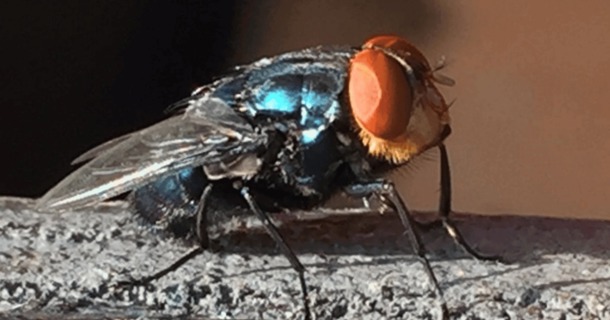
Lincoln, Neb., June 11, 2026 —The New World Screwworm (NWS), Cochliomyia hominivorax, is among the most destructive livestock pests ever encountered in the Western Hemisphere.
Unlike most fly species whose larvae develop in decaying organic matter, New World Screwworm larvae feed exclusively on live tissue of warm-blooded animals.
This feeding behavior causes severe localized tissue destruction, promotes secondary bacterial infections, reduced productivity, animal welfare concerns, and frequently death if infestations are not detected and treated promptly.
Re-emergence and Northward Expansion
The current outbreak began in 2023 when Panama and Costa Rica reported increasing numbers of Screwworm cases north of the traditional containment zone at the border of Panama and Columbia. Since then, the pest has expanded throughout Central America and into Mexico.
By June 2026, more than 171,700 animal cases and over 2,000 human cases had been reported across Mexico and Central America. Infestations have been documented in livestock, companion animals, wildlife, and humans.
Detection of New World Screwworm in Texas
A major development occurred on June 3, 2026, when USDA-APHIS confirmed New World Screwworm in a three-week-old calf in Zavala County, Texas. The infestation was identified in the calf's umbilical region. This represented the first confirmed case in the United States in decades and demonstrated that the pest had successfully crossed the international border.
Within days, USDA confirmed two additional cases, including another calf in La Salle County, Texas, and a dog in Andrews County, Texas. Investigations suggested that the dog had recently traveled from Mexico. These detections triggered an aggressive federal and state response designed to contain and eradicate the infestations before establishment of a reproducing population could occur.
Biology and Economic Importance
Adult female Screwworm flies are attracted to fresh wounds on warm-blooded animals.
Common sites of infestation include branding wounds, dehorning sites, castration wounds, ear tag injuries, tick bites, surgical incisions, and the navels of newborn animals.
Females deposit eggs around wound margins, and larvae hatch within hours.
Unlike secondary myiasis-producing flies that consume dead tissue, Screwworm larvae aggressively invade healthy living tissue. As the larvae feed, wounds become progressively more severe.
The odor associated with the infestation attracts additional female flies, often resulting in multiple generations of larvae within a single wound.
Left untreated, infestations can lead to severe tissue damage, bacterial infections, toxemia, debilitation, and death.
The broad host range of New World Screwworm contributes significantly to its economic importance. The pest attacks:
Beef and dairy cattle
Sheep and goats
Horses
Swine
Companion animals
Mammalian and avian wildlife species.
Because wildlife can serve as reservoirs, eradication and containment efforts are substantially more challenging than those for many other livestock pests.
USDA APHIS Response and Management
The progressive spread of NWS cases northward through Central America over the past 3-4 years has allowed regulatory officials to develop appropriate management strategies in the event of a detection in the United States. Given the increase in cases over this time period and the progressive geographic spread, the recent cases in Texas are not surprising and more cases should be expected.
The previous NWS eradication efforts by the US of the 1960s were extremely successful in eventually pushing the pest down to southern Panama. Thankfully, these efforts have provided a proven blueprint for regulatory officials to follow relative to the current outbreak.
In April of 2026, the USDA published an updated version (V2) of what they call their NWS Response Playbook which incorporates many of the same strategies proven successful in the 1960s. The NWS Response Playbook lays out 8 primary activities which include:
Effectively manage a coordinated response and communications with stakeholders and the public
Reduce the spread of NWS and prevent established populations in new areas
Manage NWS on infected premises
Implement NWS surveillance and management strategies in wildlife
Implement NWS fly surveillance and management strategies
Maintain continuity of business
Ensure information flow and management
Identify and maintain resource requirements.
One of the most important techniques for NWS management includes implementing sterile insect technique (SIT).
A unique behavior of female NWS flies is that they only mate once in their life.
Sterile insect technique (SIT) involves rearing sterile flies and releasing them into areas with established adult fly populations to promote matings involving sterile males and wild-type females. The result is a female fly that will lay non-viable eggs for the remainder of her life (about 3 weeks), effectively removing her from the reproductive population. Over time, the continual release of sterile flies results in fewer and fewer reproductively viable adults leading to eradication.
Unfortunately, the current availability and capacity to produce sterile flies is much lower than what is needed to effectively eradicate the fly again. The USDA has made efforts prior to the official US detections to dramatically increase production. While SIT is currently in use along the US-Mexico border, it will likely be fall of 2027 before the sterile fly production and dispersion facilities in the works are fully functional. This means that while the long-term prospect of successful eradication is very promising, we will need to be diligent in our management practices in the meantime to minimize the geographic spread until an adequate number of sterile flies are available.
Implications for Nebraska Livestock Producers
NWS populations of larvae and pupae do not survive sustained soil temperatures below about 46 °F which means the likelihood of an established population in Nebraska is very unlikely. However, given the time required to ramp up sterile fly production, Nebraska remains susceptible to NWS during the warmer months.
The most significant risk for the state of Nebraska currently is the introduction of NWS larvae via animal transport into the state.
Although only a small number of U.S. cases have been confirmed to date, livestock producers should remain vigilant as new detections are likely to occur in southern states. Producers should routinely inspect livestock and monitor for:
Foul-smelling wounds
Visible maggots in wounds of living animals
Enlarging or non-healing lesions
Excessive licking or irritation
Unusual restlessness or discomfort
Infestations associated with navels, branding sites, dehorning wounds, or castration sites.
Veterinarians should be consulted immediately whenever screwworm infestation is suspected. Rapid reporting and response are essential components of containment efforts.
NWS is officially designated as a Category 1 Foreign Animal Disease requiring immediate reporting in all 50 states. Anyone who suspects NWS adults or larvae on their operation should contact their local veterinarian, the Nebraska Department of Agriculture, and/or the USDA immediately. Early detection remains the most effective defense against widespread establishment.