

Governor Pillen Proclaims May 29 National 529 Day
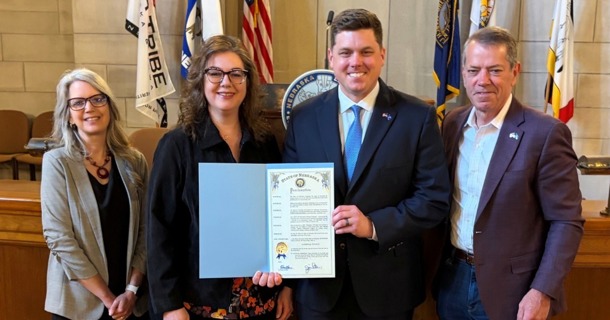
(LINCOLN, Neb.) — Gov. Jim Pillen has proclaimed May 29, 2026, as National 529 Day in Nebraska. This proclamation recognizes the importance of planning ahead for future education opportunities and encouraging families to explore the benefits of investing early.
“Education opens doors to opportunity, and planning ahead can help families feel more prepared for future education expenses,” Governor Pillen said. “National 529 Day highlights the importance of saving early and reminds Nebraskans of the resources available through NEST 529 Education Savings plans to help students pursue their educational and career goals.”
As the cost of post-secondary education, career training, and related expenses continues to rise, NEST 529 Education Savings (NEST 529) plans help families prepare for future opportunities through flexible, tax-advantaged education savings plans. Funds can be used for qualified expenses at eligible two- and four-year colleges, technical and trade schools, graduate programs, and certain apprenticeship programs.
This year’s National 529 Day celebration comes during NEST 529’s 25th anniversary year. Since launching in 2001, NEST 529 plans have helped hundreds of thousands of families nationwide save for future education expenses. More than 108,000 NEST 529 accounts are owned by Nebraska residents, demonstrating the program’s statewide impact on families.
“For a quarter century, NEST 529 accounts have helped families across Nebraska plan for future education opportunities,” State Treasurer Joey Spellerberg said. “National 529 Day reminds families that even small steps today can help support educational goals tomorrow. We’re proud to continue providing resources and opportunities that help Nebraskans save for the future.”
NEST 529 Education Savings is also making it easier for families to manage their education savings with the launch of the new NEST 529 mobile app.
The new app allows account owners to manage their NEST 529 account anytime, anywhere, with features that make it simple to check account balances and transactions, make contributions, track savings goals, manage automatic contributions, and access statements and account documents. Download the NEST 529 Direct app or NEST 529 Advisor app today.
Visit NEST529.com to learn more about the benefits of a NEST 529 Education Savings Plan.
About NEST 529 Plans
A NEST 529 Plan is a tax-advantaged savings account for higher education expenses. Tax-advantaged savings include a Nebraska state tax deduction, tax-deferred growth, and tax-free qualified withdrawals.1 Account owners in Nebraska are eligible for an annual state income tax deduction of up to $10,000 for NEST 529 Plan contributions or $5,000 if married filing separately.2
NEST 529 College Savings Plans can be used for everything from four-year universities to two-year technical schools. Opening a NEST 529 Plan account doesn’t require a minimum deposit to get started, and contributions can be managed online. NEST 529 Plans give families the ability to start investing in their loved ones’ future, so they can soar to their goals and become who they want to be as adults.
The State Treasurer serves as the Program Trustee. All investments, including the portfolio structure offered through the NEST 529 Plan, are vetted and approved by the Nebraska Investment Council.
###
About the State Treasurer’s Office: The Nebraska State Treasurer serves as the state’s chief financial officer and is responsible for the safekeeping and management of Nebraska’s public funds. The office administers the Nebraska Educational Savings Trust (NEST 529) and the Enable Savings Plan; manages and returns unclaimed property; collects and disburses child support payments; and promotes transparency in state spending. Learn more at treasurer.nebraska.gov, or follow us on Facebook, LinkedIn, and X.
About NEST 529: NEST 529 is a tax-advantaged 529 education savings plan and provides four plans to help make saving for college simple and affordable: NEST Direct College Savings Plan, NEST Advisor College Savings Plan, Bloomwell 529 Education Savings Plan, and State Farm 529 Savings Plan. The Nebraska State Treasurer serves as Program Trustee. Union Bank and Trust Company serves as Program Manager, and all investments are approved by the Nebraska Investment Council. Families nationwide are saving for college using Nebraska’s 529 Education Savings Plans, which have more than 300,000 accounts. Visit NEST529.com and treasurer.nebraska.gov for more information.
About Union Bank and Trust Company: Founded in 1917 with over 50 years of family ownership, Union Bank and Trust Company offers complete banking, lending, investment, and trust services. The bank has 38 full-service and loan production offices in Nebraska and Kansas. It is the third largest privately owned bank in Nebraska, with bank assets of $9.0 billion and trust assets of $45.5 billion as of December 31, 2025. Voters have chosen Union Bank and Trust Company as Best Bank, Best Work Environment, and Best Financial Planner in Lincoln for fourteen years running.
Important Legal Information: An investor should consider the investment objectives, risks, and charges and expenses associated with municipal fund securities before investing. This and other important information is contained in the fund prospectuses and the NEST Direct College Savings Plan Program Disclosure Statement (issuer’s official statement), which can be obtained at www.NEST529.com and should be read carefully before investing. You can lose money by investing in an Investment Option. Each of the Investment Options involves investment risks, which are described in the Program Disclosure Statement.
An investor should consider, before investing, whether the investor’s or beneficiary’s home state offers any state tax or other state benefits such as financial aid, scholarship funds, and protection from creditors that are only available for investments in such state’s 529 plan. Investors should consult their tax advisor, attorney, and/or other advisor regarding their specific legal, investment, or tax situation.
The NEST Direct College Savings Plan (the “Plan”) is sponsored by the State of Nebraska, administered by the Nebraska State Treasurer, and the Nebraska Investment Council provides investment oversight. Union Bank and Trust Company serves as Program Manager for the Plan. Union Bank and Trust Company is registered as a municipal advisor with the U.S. Securities and Exchange Commission (SEC) and the Municipal Securities Rulemaking Board (MSRB). The Plan offers a series of Investment Options within the Nebraska Educational Savings Plan Trust (the “Trust”), which offers other Investment Options not affiliated with the Plan. The Plan is intended to operate as a qualified tuition program.
Except for any investments made by a Plan participant in the Bank Savings Underlying Investment up to the limit provided by Federal Deposit Insurance Corporation (“FDIC”) insurance, neither the principal contributed to an account, nor earnings thereon, are guaranteed or insured by the State of Nebraska, the Nebraska State Treasurer, the Nebraska Investment Council, the Trust, the Plan, any other state, any agency or instrumentality thereof, Union Bank and Trust Company, the FDIC, or any other entity. Investment returns are not guaranteed. Account owners in the Plan assume all investment risk, including the potential loss of principal.
1 Withdrawals used to pay for qualified higher education expenses are free from federal and Nebraska state income tax. Qualified higher education expenses include tuition, fees, books, supplies, and equipment required for enrollment or attendance; certain room and board expenses incurred by students who are enrolled at least half-time; the purchase of computer or peripheral equipment, computer software, or Internet access and related services, if used primarily by the beneficiary during any of the years the beneficiary is enrolled at an eligible educational institution; certain expenses for special needs services needed by a special needs beneficiary; apprenticeship program expenses; and payment of principal or interest on any qualified education loan of the Beneficiary or a sibling of the Beneficiary (up to an aggregate lifetime limit of $10,000 per individual). However, earnings on all other types of withdrawals are generally subject to federal and Nebraska state income taxes, and an additional 10% federal tax.
Nebraska law does not treat the following Federal Qualified Higher Education Expenses as Nebraska Qualified Expenses: Qualified Postsecondary Credentialing Expenses before July 17, 2026, and K-12 Expenses. If a withdrawal is made for such purposes, although it is a Federal Qualified Withdrawal, it will be treated as a Nebraska Non-Qualified Withdrawal and may result in the recapture of a previously claimed Nebraska state income tax deduction, and the earnings portion will be subject to Nebraska state income tax. Please consult your tax professional about your particular situation.
Nebraska Legislative Bill 748 amends Nebraska law to expand the definition of Nebraska Qualified Expenses as follows:
Effective July 17, 2026, withdrawals used to pay Qualified Postsecondary Credentialing Expenses are set to be treated as Nebraska Qualified Expenses; and
Beginning January 1, 2029, withdrawals used to pay K–12 Expenses are set to be treated as Nebraska Qualified Expenses, subject to the federal annual limitation (currently $20,000 per Beneficiary per taxable year).
2 Account owners may deduct for Nebraska income tax purposes contributions they make to their own account (and any other accounts they own in the Nebraska Educational Savings Plan Trust) up to an overall maximum of $10,000 ($5,000 if married, filing separately). Contributions in excess of $10,000 cannot be carried over to a future year. For a minor-owned or UGMA/UTMA 529 account, the minor is considered the account owner for Nebraska state income tax deduction purposes. The minor must file a Nebraska tax return for the year their contributions are made to be eligible for a tax deduction for their own contributions. In the case of a UGMA/UTMA 529 account, contributions by the parent/guardian listed as the Custodian on the UGMA/UTMA Plan account are also eligible for a Nebraska state tax deduction.
NOT FDIC INSURED*| NO BANK GUARANTEE | MAY LOSE VALUE
(*Except the Bank Savings Underlying Investment)